
Element Federal Credit Union
The Woman Card
with Pink Tax Payback Rewards
Make a statement.
Get something back.
Products and services marketed to women can cost more than comparable options marketed to men. These price differences—often called the Pink Tax—can add up.
Pink Tax Payback Rewards
7%*
Cash Back
*Qualifying purchases must fall within designated merchant categories. Eligibility is based on the merchant category code, not the individual items purchased. Not all merchants qualify.
Membership eligibility and applicable approval requirements apply. View rewards details.
We’re Not Your Grandfather’s Bank
Because Your Grandmother Couldn’t Even Have One
Let. That. Sink. In.
For most of American history, women couldn’t own property, open bank accounts, or access credit without male permission. The financial system wasn’t designed for them; it was designed to exclude them. So women did what women do: they built their own. Credit unions were born from communities that banks refused to serve, and at Element FCU, we carry that legacy forward. This International Women’s Day, we’re not just celebrating progress, we’re exposing the truth about how far women have had to fight for something as basic as a bank account, and we’re providing the tools to keep building wealth on their own terms.
💸 The Pink Tax Calculator
Discover how much extra you've paid just for being a woman
Your Pink Tax Reality Check
💇♀️ Personal Care Products
Extra paid on razors, shampoo, deodorant, and other daily essentials since age 18
👗 Clothing & Dry Cleaning
Women's clothing costs more and dry cleaning charges extra for women's garments
🩹 Healthcare & Products
Period products, medications, and healthcare services often cost more for women
🚗 Services & Insurance
Car repairs, insurance premiums, and other services where women often pay premium prices
💔 TOTAL PINK TAX PAID
What If You Invested That Money Instead?
If you invested your Pink Tax payments in a diversified portfolio with a 7% annual return...
That's your potential wealth if the playing field was level.
Let's Change This Together
Element Federal Credit Union believes in financial equality. We're a credit union, which means we're owned by our members, not shareholders. Every decision we make puts YOU first.
Open an account today and start building the wealth you deserve.
Join ElementCalculator Estimates are for Educational Purposes Only
The Pink Tax Calculator provides estimates based on published research and national averages. Individual results vary. This is not financial advice. Consult a financial advisor for personalized guidance.
Read full site disclaimer.
Consumer Reports has a great video on the Pink Tax. You can view it here.
In Honor of International Women’s Day
The Woman Card


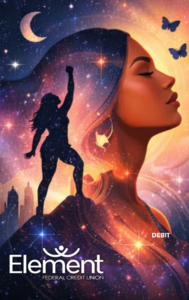
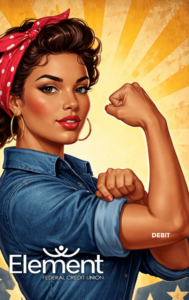
Interested in The Woman Card? Let’s talk!
Earn 7% cash back* on qualifying purchases in designated categories including personal care & beauty, clothing & dry cleaning, healthcare & wellness, children’s products, and home goods & services.*
You can’t know where you’re going until you understand where you’ve been.
Explore the history of women and money—from being legally barred from owning property to building wealth-generating institutions of their own. These aren’t feel-good stories. They’re battle chronicles. And they explain exactly why credit unions exist.
Two histories. One truth: Women built their own path when the system blocked the door.
Women & Money:
A History of Breaking Barriers
200 Years of Fighting for Financial Freedom
The Reality Today (2026)
Statistics below are approximate and based on recent national data (2024-2025). Individual experiences and regional variations may differ.
💰 The Wage Gap
Women earn approximately 82¢ to every $1 men earn (varies by source and methodology). Black women: approximately 67¢. Latina women: approximately 57¢. This compounds over a lifetime into a massive wealth gap.
👶 Motherhood Penalty
Mothers earn approximately 70 cents for every dollar fathers earn. The gap widens with each additional child.
💳 The Pink Tax
Women pay an average of 7% more for similar products. Over a lifetime, this costs tens of thousands of dollars.
📉 Retirement Crisis
Women retire with 30% less in savings than men, live longer, and are more likely to face poverty in old age.
🏠 Homeownership Gap
Single women face higher mortgage rejection rates than single men with the same credit scores and income.
🎓 Student Debt Burden
Women hold approximately two-thirds of all student loan debt in the United States, taking longer to pay it off due to lower earnings.
The barriers may be invisible now, but they're still there.
Historical Information
Historical content is compiled in good faith from publicly available sources. While we strive for accuracy, some details may be subject to scholarly interpretation. We welcome corrections from credible sources.
Read full site disclaimer.
Women's Financial Institutions:
A History of Self-Determination
When Traditional Banks Said No, Women Built Their Own
For most of American history, women were systematically excluded from the financial system. Unable to access credit, open accounts, or build wealth through traditional banks, women created alternative financial institutions rooted in mutual aid, cooperation, and community support.
Significance:
These early institutions proved that women were reliable savers and borrowers, directly challenging the banking industry's sexist assumptions. They laid the groundwork for the credit union movement that would follow.
Why This Mattered for Women:
Credit unions operated on the principle of "people helping people" rather than profit maximization. This meant they were willing to serve populations that traditional banks considered "unbankable"—including women, immigrants, and low-wage workers. One member, one vote meant women had actual power in these institutions.
Legacy:
Many educators' credit unions operating today trace their roots to these Depression-era women's initiatives. They demonstrated that women in female-dominated professions needed—and could successfully operate—their own financial institutions.
Historical Importance:
These networks preserved and built Black wealth during periods of extreme violence, economic terrorism, and legal discrimination. They funded education, supported families during crises, and helped Black women buy property and start businesses despite total exclusion from traditional financial institutions. This history of mutual aid directly influenced the Black-owned credit union movement that emerged in later decades.
Ongoing Impact:
Self-Help continues to demonstrate that serving communities traditional banks ignore isn't just morally right—it's financially sound. Their work proves that women, given access to fair financial services, are excellent customers and community builders.
Why Credit Unions Matter for Women
Democratic Structure
One member, one vote—regardless of account balance. Women have equal voice and power in credit union governance, something denied to them in traditional banking for generations.
Not-for-Profit Mission
Credit unions exist to serve members, not maximize shareholder profits. This means they can take chances on "risky" borrowers—like women without credit history or single mothers—that traditional banks reject.
Community Focus
Credit unions understand their members' lives. They see that a single mother with stable employment is a good credit risk. They recognize that caregiving gaps in work history don't indicate unreliability. They look at the whole person, not just a credit score.
Financial Education
Credit unions pioneered financial literacy programs designed specifically for populations that banks had excluded. These programs help women build credit, understand their rights, and make informed financial decisions.
The Legacy: Why This History Still Matters
🏦 Alternative to Predatory Banking
Women—especially single mothers, women of color, and low-income women—remain prime targets for predatory lenders. Credit unions offer a safer, fairer alternative rooted in the same cooperative principles that helped women survive financial exclusion for generations.
💪 Economic Empowerment Through Ownership
When you join a credit union, you become an owner, not just a customer. This matters especially for women who were historically barred from ownership of any kind—property, businesses, or financial institutions.
🤝 Community Accountability
Member ownership creates accountability. Discrimination is harder to hide when your neighbors own the institution. Credit unions can't ignore the needs of women in their communities without facing direct member pressure.
📚 Proving Banks Wrong
Every successful credit union loan to a woman, every business started, every home purchased proves that the banking industry's historical exclusion of women was never about financial risk—it was about discrimination. Credit unions challenged and continue to challenge those assumptions.
🌍 Global Inspiration
The model of women's financial cooperatives born in America inspired microfinance movements worldwide. From Bangladesh to Bolivia, women's financial self-help organizations lift millions out of poverty using principles pioneered by excluded American women.
✊ Continuing the Fight
While legal discrimination has ended, structural barriers remain—wage gaps, motherhood penalties, wealth disparities. Credit unions continue serving women facing barriers that traditional banks ignore or exploit, carrying forward a 150-year tradition of financial justice.
Element FCU Continues This Legacy
We're not just a credit union. We're part of a tradition of financial institutions built by and for people that traditional banks excluded. Our commitment to serving all members fairly isn't marketing—it's our founding principle.
When you bank with a credit union, you're not just a customer. You're an owner. A member. Part of the movement.
Join ElementHistorical Information
Historical content is compiled in good faith from publicly available sources. While we strive for accuracy, some details may be subject to scholarly interpretation. We welcome corrections from credible sources.
Read full site disclaimer.
Disclaimer & Important Information
International Women's Day 2026 Educational Materials
⚠️ Educational Purpose Only
The information, calculators, and historical content provided on this page are for educational and informational purposes only. They are designed to raise awareness about financial barriers affecting women and to promote financial literacy. This content does not constitute financial, legal, or professional advice.
Pink Tax Calculator Disclaimer
The Pink Tax Calculator provides estimates only. Calculations are based on:
- Published research studies and academic reports on gender-based pricing disparities
- National averages and statistical data from consumer protection agencies
- General assumptions about product purchasing patterns and service usage
Individual results will vary significantly based on personal purchasing habits, geographic location, brand preferences, and lifestyle choices. The calculator uses generalized data and should not be considered a precise calculation of any individual's actual expenditures or losses. Investment growth projections assume a consistent 7% annual return and do not account for market volatility, fees, taxes, or individual investment choices.
This calculator is not financial advice. For personalized financial planning, please consult with a qualified financial advisor.
Historical Information Disclaimer
The historical timelines and narratives are compiled from multiple sources and represent our good-faith efforts to present accurate information. However:
- Historical dates, facts, and events are based on publicly available research, academic sources, and historical records
- Some historical details may be subject to scholarly debate or varying interpretations
- We have made reasonable efforts to verify information but cannot guarantee absolute accuracy of all historical claims
- Historical accounts may reflect sources available at the time of publication and may be updated as new research emerges
Element Federal Credit Union has compiled this historical information in good faith for educational purposes. While we strive for accuracy, we acknowledge that historical research is complex and subject to interpretation. We welcome corrections or additional information from credible sources.
Credit Union History Disclaimer
The history of women's credit unions is documented to the best of our knowledge based on available historical records. Please note:
- Many early women's financial cooperatives operated informally and left limited written records
- Dates and specific details may vary across different historical sources
- Some organizations mentioned may have changed names, merged, or ceased operations
- This is not an exhaustive or complete history of all women's credit unions
The stories and accounts included represent significant examples of women's financial organizing but are not intended to be a comprehensive historical record. We acknowledge there are many more stories and institutions not included here.
Statistical Information Disclaimer
Current statistics on wage gaps, economic disparities, and financial barriers are based on:
- U.S. Census Bureau data
- Bureau of Labor Statistics reports
- Academic research and peer-reviewed studies
- Reports from financial institutions and consumer advocacy organizations
Statistics represent national averages and may not reflect individual circumstances or specific geographic regions. Economic data is subject to change and is current as of the date of publication. Wage gap statistics vary depending on methodology, data sources, and demographic categories examined.
No Legal or Financial Advice
Nothing on this page should be construed as legal advice, financial advice, investment advice, or professional guidance. The content is educational only. For specific advice regarding your personal financial situation, please consult with:
- A licensed financial advisor for investment and financial planning questions
- A qualified attorney for legal matters
- A certified public accountant for tax-related questions
- Element Federal Credit Union staff for information about our specific products and services
Element Federal Credit Union Products & Services
References to Element Federal Credit Union services, accounts, and programs are for informational purposes. All products and services are subject to approval and eligibility requirements. Terms, conditions, fees, and availability may vary and are subject to change. Please contact Element Federal Credit Union directly or visit our website for current product information, rates, and terms.
Membership eligibility requirements apply. Not all individuals may qualify for membership or all products and services.
Links and External Resources
This page may contain links to external websites or references to third-party research. Element Federal Credit Union does not control, endorse, or assume responsibility for the content, accuracy, or opinions expressed on external sites. Links are provided for informational purposes only.
Updates and Corrections
Element Federal Credit Union reserves the right to update, modify, or correct information on this page at any time without notice. We are committed to accuracy and welcome feedback. If you believe any information is inaccurate or requires correction, please contact us at Team@ElementFCU.org.
Limitation of Liability
Element Federal Credit Union, its officers, directors, employees, and agents shall not be liable for any direct, indirect, incidental, consequential, or punitive damages arising from the use of or reliance on information contained on this page. This includes but is not limited to decisions made based on calculator estimates, historical information, or statistical data presented.
Pink Tax Payback Rewards FAQ
Everything you need to know about fighting back against unfair pricing
The Basics
The Pink Tax Payback Card is a credit card from Element Federal Credit Union that gives you 7% cash back on purchases in categories where women historically pay more than men for the same or similar products and services.
It's our way of fighting back against gender-based pricing discrimination. Every time you buy an overpriced product, we put money back in your pocket.
The Pink Tax refers to the practice of charging women more for products and services that are identical or very similar to those marketed to men. Studies show women pay approximately 7% more on average for:
- Personal care products (razors, shampoo, deodorant)
- Clothing and dry cleaning services
- Toys and children's products
- Healthcare and wellness items
Over a lifetime, the Pink Tax costs women approximately $82,000.
The Pink Tax Payback Card is available to all Element Federal Credit Union members who meet standard credit qualifications. You must:
- Be a member of Element FCU (or eligible to join)
- Be at least 18 years old
- Meet creditworthiness requirements
- Have sufficient income to support credit payments
This card is available to everyone, regardless of gender. We believe fighting unfair pricing benefits everyone.
How It Works
You earn 7% cash back on qualifying purchases in these categories:
- Personal Care & Beauty: Razors, shampoo, skincare, cosmetics, haircare products, salon services
- Clothing & Dry Cleaning: Women's apparel, alterations, professional cleaning services
- Healthcare & Wellness: Over-the-counter medications, menstrual products, health supplements, pharmacy purchases
- Children's Products: Toys, clothing, and gear marketed specifically to girls
- Home Goods & Services: Household items, cleaning products, personal services
Important: Categories are determined by merchant category codes assigned by the credit card payment network. Not all merchants are included in designated categories.
Qualifying purchases are determined by the merchant category code (MCC) assigned by the credit card payment network, not by the specific products you buy. For example:
✅ Likely to Qualify:
• Purchases at drugstores, beauty supply stores, salons
• Dry cleaning services
• Clothing retailers
• Toy stores
❌ May NOT Qualify:
• General merchandise stores (like Target or Walmart) even if buying qualifying products
• Online marketplaces with mixed category codes
• Warehouse clubs
Cash back is earned at the time of purchase and credited to your account monthly. You'll see your rewards posted each month you have qualified purchases.
There is no minimum redemption amount. Your cash back is automatically credited to your account each month.
Your cash back is credited directly to your credit card account as a statement credit, which reduces your balance.
No. There is no cap on the amount of 7% cash back you can earn on qualifying purchases. The more you spend in qualifying categories, the more you get back.
Application & Eligibility
You can apply for the Pink Tax Payback Rewards Card:
- Online: Visit elementfcu.org and click "Apply Now"
- In Person: Visit any Element FCU branch
- By Phone: Call us at 304-721-4145
You'll need to provide basic information including your Social Security number, income, and employment details.
Yes! You can join Element FCU and apply for the Pink Tax Payback Rewards Card at the same time. Most people in our service area are eligible to join. Check your eligibility at elementfcu.org or ask when you apply.
We evaluate each application individually based on your complete credit profile, not just your credit score. Factors we consider include:
- Credit score and credit history
- Income and employment stability
- Debt-to-income ratio
- Existing relationship with Element FCU
We encourage you to apply even if your credit isn't perfect. As a credit union, we look at the whole picture.
Most applications receive a decision within minutes to 24 hours. In some cases, we may need additional documentation, which could extend the timeline to 3-5 business days.
Once approved, you'll receive your Pink Tax Payback Rewards Card within 7-10 business days.
Common Questions
You can have one Pink Tax Payback Rewards Card per member. However, you can request authorized user cards for family members, which will earn rewards on the same account.
If you return a purchase that earned cash back, the cash back for that purchase will be deducted from your rewards balance.
Element FCU reserves the right to modify or discontinue the rewards program with 30 days' notice to cardholders. However, our commitment to fighting the Pink Tax is central to this card's mission, and we have no plans to reduce or eliminate the 7% cash back benefit.
No. The Pink Tax Payback Rewards Card is available to all Element FCU members who qualify, regardless of gender.
While the Pink Tax disproportionately affects women, we believe fighting unfair pricing benefits everyone. Plus, many cardholders use their rewards to support the women in their lives—partners, daughters, mothers, friends.
Still Have Questions?
Our team is here to help you understand the Pink Tax Payback Rewards Card and how it can work for you.
Contact Us